

Barcode vs QR Code vs RFID: Which Identification System Is Best?
Barcode vs QR Code vs RFID: Which Identification System Is Best?
Choosing the right product identification system is not just a technical decision. It directly impacts how efficiently your business tracks assets, manages inventory, and maintains compliance. Barcodes, QR codes, and RFID each serve a purpose, but they are not interchangeable. The right choice depends on your environment, use case, and long term operational goals.
Understanding the Basics
Barcodes are the most widely used identification system. They store data in a series of parallel lines that can be scanned using a reader. Typically, barcodes contain limited information such as a product ID or serial number that links to a database.
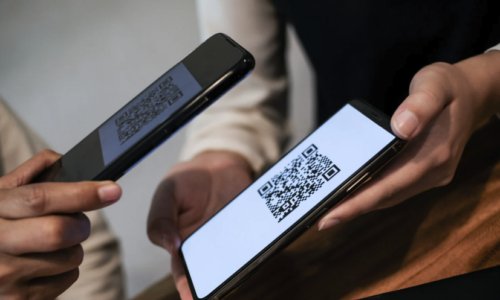
QR codes take this a step further by storing data in a two dimensional format. They can hold significantly more information and can be scanned using smartphones, making them highly accessible.
RFID, or Radio Frequency Identification, uses radio waves to transmit data between a tag and a reader. It does not require direct line of sight, allowing for automated tracking and faster data collection.
At their core, all three systems rely on one critical component: the label itself. Without a durable, well-designed label, even the most advanced identification system can fail in real-world conditions.
Barcode: Simple and Cost Effective
Barcodes are a reliable and cost-effective solution for many applications. They are easy to implement and integrate seamlessly with existing inventory systems.
They are especially effective in controlled environments such as warehouses and retail operations. However, barcodes require direct line of sight and can be affected by damage, dirt, or wear.
This is where label quality becomes essential. Impact Label specializes in producing barcode labels that remain readable over time, even in demanding environments. Their product identification labels are designed to withstand heat, chemicals, abrasion, and outdoor exposure, ensuring consistent performance where standard labels fall short.
QR Codes: More Data, More Flexibility
QR codes provide greater flexibility by allowing more data to be stored directly on the label. This makes them ideal for applications where users need instant access to product information, maintenance records, or compliance documentation.
They are also highly versatile because they can be scanned with smartphones, reducing the need for specialized equipment. This is especially valuable for field teams, technicians, and multi-location operations.
Impact Label supports QR code implementation through custom, variable data printing solutions. This allows each label to carry unique, product-level information such as serial numbers, tracking data, or maintenance schedules.
However, like barcodes, QR codes still require visibility and can degrade in harsh environments without the right materials and finishes.
RFID: Automation and Real-Time Tracking
RFID offers the most advanced capabilities of the three systems. It enables automatic data capture without manual scanning, making it ideal for high-volume operations and complex supply chains.
RFID tags can be read from a distance and in bulk, allowing businesses to track assets in real time as they move through a facility. This significantly reduces labor and improves accuracy.
Impact Label provides custom RFID labels and smart tagging solutions that integrate directly into asset tracking and inventory systems. These solutions are particularly valuable for manufacturers and OEMs that need scalable, high-efficiency tracking across their operations.
The tradeoff is cost and complexity. RFID requires more infrastructure and upfront investment compared to barcodes or QR codes.
Why the Label Matters More Than the Technology
While the differences between barcode, QR code, and RFID systems are important, the success of any identification system depends heavily on the label itself.
Impact Label has spent decades engineering labels that perform in real-world conditions, not just controlled environments. Founded in 1964, the company has built a reputation as a trusted partner for OEMs across industries including automotive, medical, and industrial equipment.
Their approach focuses on:
- Selecting the right materials such as vinyl, polyester, or metal
- Engineering adhesives for specific surfaces and environments
- Using advanced printing methods including digital, flexographic, and screen printing
- Designing labels that meet compliance, durability, and branding requirements
This level of customization ensures that identification systems remain functional and readable over time, even in extreme conditions.
Which Identification System Is Best?
There is no one-size-fits-all answer. The best system depends on your specific application.
Barcodes are ideal for simple, cost-sensitive tracking.
QR codes are best when you need more data and flexibility.
RFID is the right choice for automation, real-time visibility, and large-scale operations.
Many companies use a combination of these systems to maximize efficiency. For example, QR codes or barcodes may be used for individual product identification, while RFID tracks bulk movement across a supply chain.
Making the Right Decision
Selecting the right identification system starts with understanding your environment, operational needs, and long-term goals.
Just as important is choosing a labeling partner that can engineer solutions tailored to your application. Impact Label acts as a full-service partner, supporting everything from design and prototyping to full-scale production and inventory management.
The right identification strategy does more than track products. It ensures durability, improves efficiency, reduces risk, and supports smarter business decisions at every stage of your operation.