

How to Design High-Visibility Warning and Safety Labels That Last
How to Design High-Visibility Warning and Safety Labels That Last
Safety labels aren’t just stickers on equipment, they are life-saving communication tools. In manufacturing, construction, and other high-risk industries, the right warning label can prevent accidents, keep workers safe, and protect companies from costly liability. But here’s the challenge: not all labels are built to last.
Environmental stress, chemicals, abrasion, and UV exposure can quickly make a poorly designed label unreadable. To ensure compliance and safety, companies must invest in high visibility safety labels that maintain clarity and adhesion over time.
This guide explains how to design safety labels that workers can’t miss, and that will hold up in even the harshest environments.
Why High-Visibility Labels Are Critical
The purpose of a safety label is simple: to deliver clear warnings and instructions that reduce risk. But visibility is key. If a label is hard to see, poorly contrasted, or worn down, workers may miss critical information.
High-visibility labels reduce these risks by:
- Drawing attention to hazards quickly.
- Reinforcing compliance with OSHA and ANSI standards.
- Preventing injuries and workplace accidents.
- Protecting your business from legal and financial penalties.
In short, investing in the right labels protects both people and profits.
The Building Blocks of a High-Visibility Safety Label
Designing safety labels requires both visual impact and material durability. Here’s what to prioritize:
1. Color and Contrast
Use bold, standardized colors that signal urgency. OSHA and ANSI recommend specific color codes:
- Red: Danger or fire-related hazards.
- Orange: Warning of potentially hazardous situations.
- Yellow: Caution for minor or moderate risks.
- Green/Blue: Information, safety instructions, or general notices.
High-contrast backgrounds ensure text and symbols are readable even from a distance.
2. Pictograms and Symbols
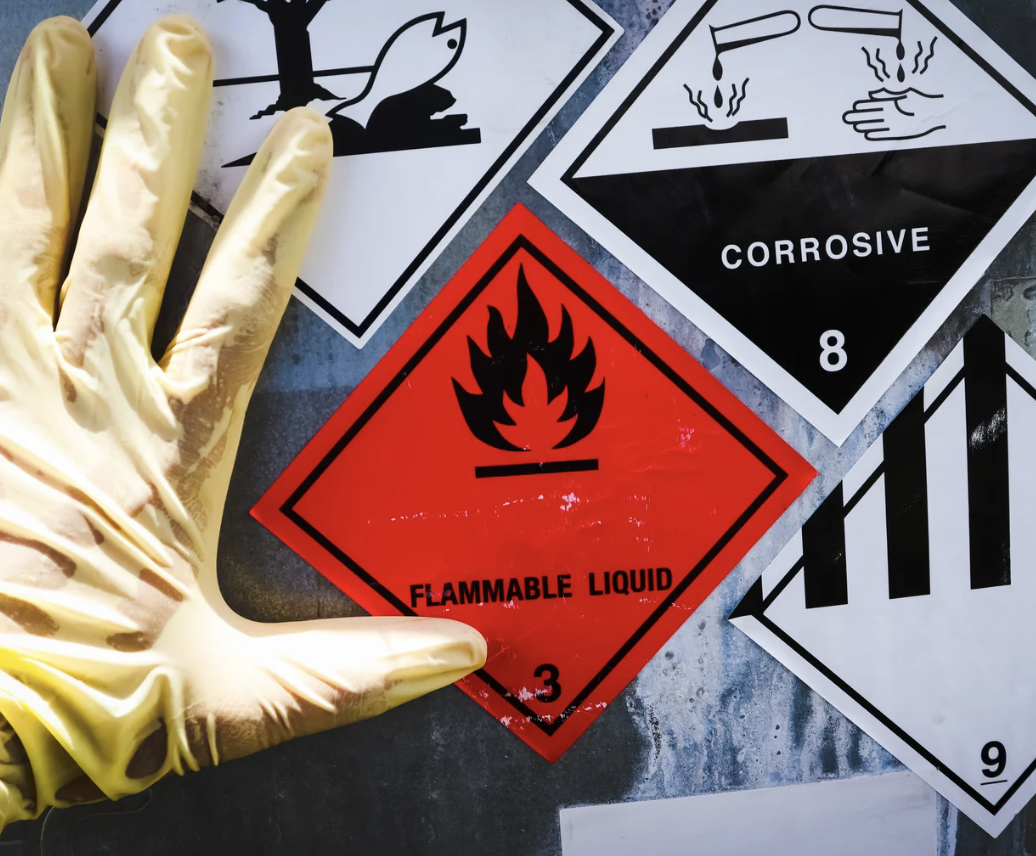
Workers don’t always have time to read. Recognizable safety icons help communicate hazards instantly. For example, a lightning bolt symbol for electrical hazards or a flame for fire risks.
3. Signal Words
Words like Danger, Warning, and Caution create hierarchy and urgency. According to ANSI standards, these should be in uppercase, bold text, paired with appropriate color backgrounds.
4. Durable Materials
High-visibility means little if the label doesn’t last. Materials like polyester and polycarbonate stand up to harsh environments, resisting chemicals, moisture, and UV degradation. Protective laminates or domed coatings add even more resilience.
5. Permanent Adhesives
Labels often fail because adhesives can’t hold up to heat, cold, or oily surfaces. Industrial-grade adhesives ensure labels stay where they’re applied; no peeling corners, no lost warnings.
Designing for Different Environments
Not all safety labels face the same conditions. Here’s how to adapt:
- Indoor Facilities: Focus on clarity and compliance. Vinyl labels may be sufficient where exposure is minimal.
- Outdoor Environments: Choose UV-resistant inks and laminates to prevent fading.
- Industrial/Harsh Settings: Polyester labels with protective coatings withstand chemicals, abrasion, and heat.
- Medical or Sterile Areas: Use labels with FDA-compliant adhesives that survive sterilization processes.
Understanding the environment is key to choosing the right material and design.
Compliance with OSHA and ANSI Standards
High-visibility safety labels must also meet regulatory standards. OSHA requires hazard communication that is visible, durable, and standardized. ANSI Z535 provides specific guidelines on colors, formats, and symbols.
Impact Label ensures compliance by:
- Using OSHA- and ANSI-approved color codes.
- Integrating proper signal words and layouts.
- Printing with fade-resistant inks that pass durability tests.
Compliance isn’t just a legal box to check — it’s an investment in workforce safety.
Why Partner with a Custom Label Expert
Designing effective high-visibility safety labels is a specialized task. Many companies make the mistake of using generic labels or home-printed solutions that fail under stress. By working with a custom label manufacturer like Impact Label, you get:
- Tailored Solutions: Labels designed specifically for your equipment and environment.
- Prototyping and Testing: Assurance that labels perform before full-scale production.
- Industry Expertise: Guidance on compliance, materials, and design best practices.
- Long-Term Savings: Fewer replacements, reduced downtime, and minimized liability.
High-visibility safety labels are more than a compliance requirement — they are a frontline defense against accidents and liability. By combining bold design elements with durable materials, companies can ensure their labels remain legible, reliable, and compliant for years.
At Impact Label, we help businesses across industries design and manufacture custom safety labels that truly last. Whether you need OSHA-compliant warning decals for machinery or ANSI-standard hazard signs for your facility, we’ll make sure your workers and your reputation stay protected.
When safety is on the line, your labels can’t fail, and neither can we.