
RFID Technology Explained: How It Works, Types, Frequencies, and Performance
Radio Frequency Identification (RFID) technology is changing how manufacturers, retailers, and supply chain professionals identify, track, and manage products. From improving inventory accuracy to monitoring valuable equipment, RFID provides businesses with greater visibility and control over their operations.
But how does RFID actually work? Understanding the different types of RFID technology, operating frequencies, and components can help businesses determine which solution best fits their application.
In this guide, we’ll explore the fundamentals of RFID technology, including how RFID labels communicate, what makes up an RFID inlay, and which factors influence overall performance.
What Is RFID and How Does It Work?
RFID stands for Radio Frequency Identification. It is a wireless technology that uses radio waves to transmit information between an RFID tag and a reader. Unlike traditional barcode labels, RFID does not require direct line-of-sight scanning, allowing multiple tagged items to be identified simultaneously.
A typical RFID system includes three primary components:
- RFID Tags: Contain a microchip and antenna that store and communicate identifying information.
- RFID Readers: Transmit radio signals and receive information from nearby RFID tags.
- Software Systems: Process the collected data and connect it to inventory, asset management, or supply chain databases.
When an RFID reader sends out a radio frequency signal, a compatible tag within range responds with its stored information. The reader captures that data and sends it to a connected software system, where it can be used to update inventory records, track products, or monitor equipment.
This automated identification process helps businesses reduce manual scanning, improve tracking accuracy, and streamline daily operations.
Understanding the Different Types of RFID Technology
RFID systems are generally categorized as passive, active, or semi-passive, depending on how the tag receives power and communicates with a reader.
Passive RFID
Passive RFID tags do not contain an internal battery. Instead, they receive energy from the radio frequency signal transmitted by an RFID reader. This energy activates the tag’s microchip, allowing it to communicate its stored information.
Passive RFID labels are commonly used for inventory management, retail product identification, manufacturing, and supply chain tracking. Their relatively low cost and compact design make them a practical option for high-volume applications.
Active RFID
Active RFID tags contain an internal battery that powers their communication capabilities. Because they have their own power source, they can transmit signals over longer distances than passive tags.
These systems are often used for tracking high-value equipment, vehicles, shipping containers, and other assets across large facilities.
Semi-Passive RFID
Semi-passive RFID tags also contain an internal battery, but they typically rely on a reader’s signal to communicate their stored information. The battery powers internal circuitry or sensors rather than continuously transmitting a signal.
These tags can be useful for specialized applications that require additional monitoring capabilities, such as temperature or environmental condition tracking.
RFID Frequencies: LF, HF, and UHF Explained
One of the most important considerations when selecting an RFID solution is its operating frequency. Different frequencies offer different read ranges, communication speeds, and performance characteristics.
The three primary RFID frequency categories include:
Low Frequency (LF): 125–134 kHz
LF RFID offers relatively short read ranges and is generally less affected by interference from nearby materials. Common applications include animal identification, access control, and industrial automation.
High Frequency (HF): 13.56 MHz
HF RFID provides moderate read ranges and is commonly used for contactless payment systems, identification cards, ticketing, and certain product tracking applications. Near Field Communication (NFC), which is frequently used with smartphones, operates within this frequency range.
Ultra-High Frequency (UHF): 860–960 MHz
UHF RFID, also known as RAIN RFID, is widely used for inventory management, logistics, manufacturing, and supply chain tracking. It supports longer read ranges and can identify multiple tagged items quickly.
For manufacturers and retailers managing large quantities of products, UHF RFID is often an effective solution for improving inventory visibility and tracking efficiency.
Frequency availability and operating requirements vary by region. Businesses should ensure their RFID tags and readers are compatible with the applicable standards and regulations.
For additional technical information, GS1 provides an overview of RFID frequency standards and applications.
What Is an RFID Inlay?
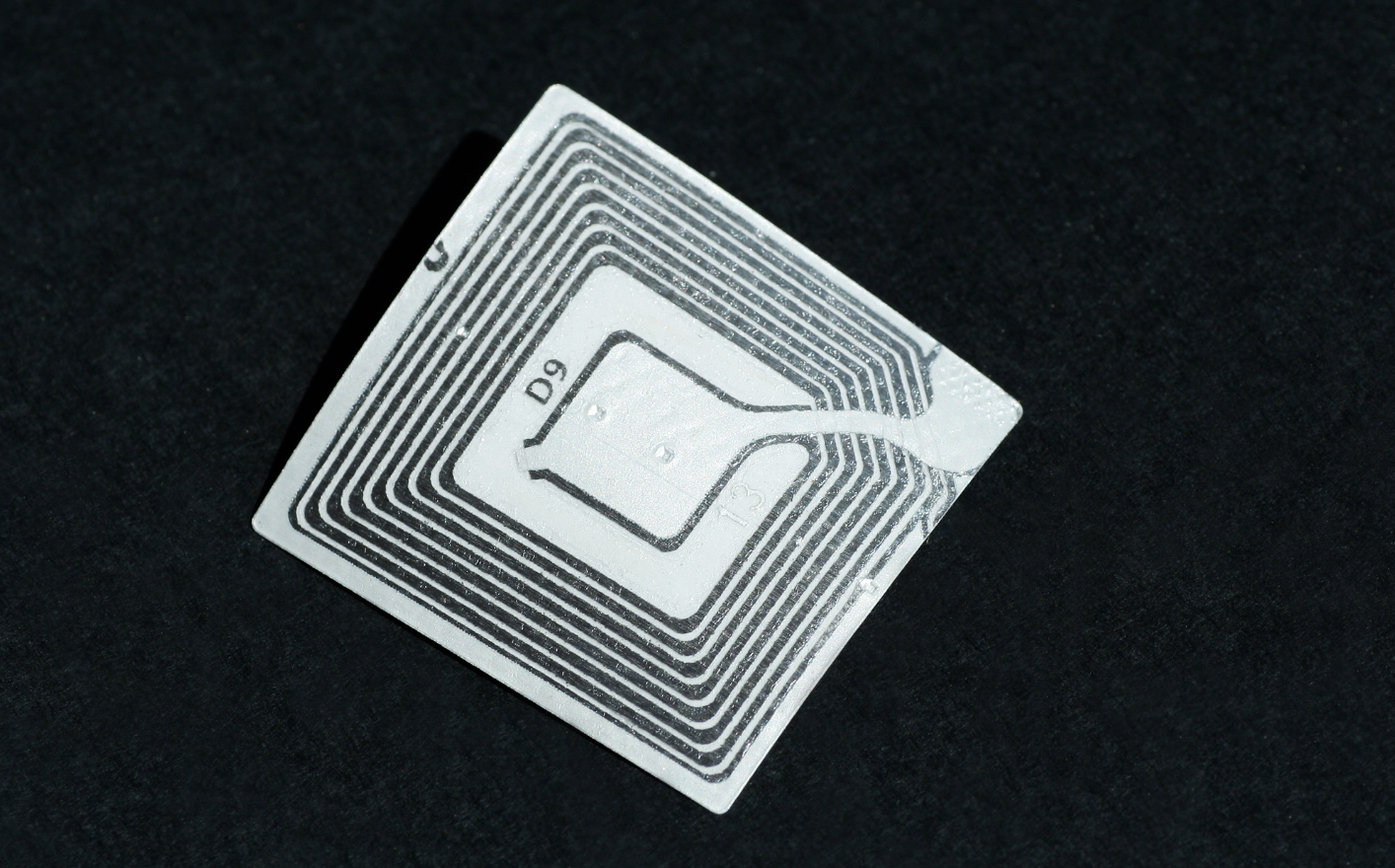
An RFID inlay is the electronic component embedded inside an RFID label or tag. It typically consists of two essential parts:
- Microchip: Stores identifying information and processes communication with the RFID reader.
- Antenna: Receives radio frequency energy and enables the tag to communicate with the reader.
The chip and antenna work together to transmit information wirelessly. Once the inlay is incorporated into a label construction, it can be applied to products, packaging, equipment, or other surfaces.
RFID inlays come in different sizes, shapes, and configurations depending on the intended application. Selecting the right inlay is important because antenna design, chip capabilities, and label construction can all influence performance.
For manufacturers, custom RFID labels offer opportunities to combine electronic identification with printed graphics, product information, and branding.
What Factors Affect RFID Label Performance?
Even with the right RFID frequency and technology, several factors can influence how reliably an RFID label performs.
1. Material Compatibility
The surface where an RFID label is applied can affect radio frequency communication. Metal surfaces can reflect or interfere with signals, while liquids can absorb UHF energy. Specialized on-metal RFID tags and application-specific designs can help address these challenges.
2. Antenna Design and Placement
The antenna’s size, shape, and orientation influence how effectively an RFID tag communicates with a reader. Proper placement and testing help improve read consistency.
3. Read Range and Reader Configuration
Reader power, antenna positioning, surrounding equipment, and the physical layout of a facility can all affect read range. RFID systems should be evaluated under actual operating conditions rather than relying solely on theoretical performance specifications.
4. Environmental Conditions
Temperature changes, moisture, chemicals, abrasion, and other environmental factors can affect the durability of the finished RFID label. Selecting appropriate materials, adhesives, and protective finishes helps ensure the label remains functional throughout its intended service life.
Finding the Right RFID Solution for Your Application
RFID technology offers manufacturers new opportunities to improve product identification, inventory management, asset tracking, and supply chain visibility. However, selecting the right solution requires more than choosing a frequency or tag type.
Businesses should consider their operating environment, application requirements, reader compatibility, read range, and label construction before implementing an RFID system.
At Impact Label, we help manufacturers explore custom RFID labeling solutions designed around their products and operating requirements. From material selection to label design and production, our team works with OEMs to develop identification solutions that support reliable performance.
Whether you’re exploring RFID for inventory management, asset tracking, or product traceability, the right label design can make a meaningful difference.
Explore Impact Label’s Custom RFID Labels and Tags or contact our team to discuss your application.