

What Information Should Be Included on an Industrial Equipment Label?
What Information Should Be Included on an Industrial Equipment Label?
Industrial equipment labels do much more than identify a machine or display a company logo. They can communicate critical safety information, provide operating instructions, identify equipment for tracking and maintenance, and help manufacturers meet applicable industry requirements.
For OEMs and manufacturers, deciding what information to include on an industrial equipment label depends on the equipment, its operating environment, potential hazards, applicable standards, and how the product will be used.
While requirements vary by application, industrial equipment labels commonly include product identification, manufacturer information, safety warnings, operating instructions, electrical or technical specifications, compliance markings, and traceability information.
1. Product and Equipment Identification
One of the primary purposes of an industrial label is to clearly identify the equipment.
Identification information may include:
- Product or equipment name
- Model number
- Part number
- Serial number
- Manufacturing date
- Equipment classification
Clear identification helps operators, maintenance teams, distributors, and manufacturers determine exactly which piece of equipment they are working with.
Serial numbers and unique equipment IDs are particularly valuable for warranty claims, maintenance records, replacement parts, recalls, and asset management.
2. Manufacturer Information
Industrial equipment labels may also identify the company responsible for manufacturing the product.
Depending on the equipment and applicable requirements, this information could include the manufacturer’s name, logo, website, contact information, or location.
Manufacturer identification makes it easier for customers and technicians to find support, order replacement components, access documentation, or verify the equipment’s origin.
For OEMs, a professionally designed identification label also reinforces brand recognition throughout the product’s service life.
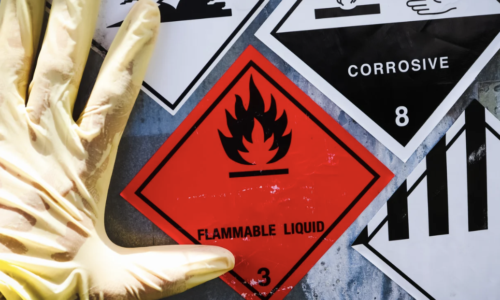
3. Safety Warnings and Hazard Information
Safety information is one of the most important elements of many industrial equipment labels.
Machinery and equipment can present hazards involving electricity, heat, pressure, moving components, chemicals, pinch points, or other potentially dangerous conditions.
Safety labels may include:
- Hazard symbols or pictograms
- Signal words such as DANGER, WARNING, or CAUTION
- A description of the hazard
- Instructions for avoiding the hazard
- Required personal protective equipment
- Lockout/tagout information
The exact warnings needed depend on the equipment and applicable safety standards.
Labels should also remain readable throughout the expected operating conditions. A warning label provides little value if heat, chemicals, abrasion, moisture, or UV exposure causes it to become unreadable.
4. Operating and Maintenance Instructions
Some industrial equipment labels provide essential instructions directly at the point of use.
These instructions might explain proper startup and shutdown procedures, lubrication requirements, maintenance intervals, cleaning procedures, equipment limitations, or emergency shutdown steps.
Keeping critical information directly on the equipment can help operators access instructions without having to locate a separate manual.
However, labels should focus on information that needs to remain readily accessible. More detailed procedures can be provided through manuals, digital documentation, or QR codes.
5. Technical and Electrical Specifications
Industrial equipment often requires labels or nameplates displaying important technical specifications.
Depending on the application, this could include:
- Voltage
- Current
- Frequency
- Power ratings
- Pressure limits
- Load capacity
- Temperature range
- Weight
- Operating speed
- Equipment dimensions
These specifications can help installers, operators, and technicians use equipment correctly and determine whether it is suitable for a particular application.
6. Compliance and Certification Markings
Some industrial equipment must display specific regulatory, certification, or standards-related information.
The markings required depend on the product, industry, and markets where the equipment is sold.
Manufacturers should determine which standards apply to their products before developing the final label. Required markings may relate to electrical safety, workplace safety, environmental requirements, product certification, or other industry-specific regulations.
Working with an experienced industrial label manufacturer can help OEMs produce labels that accommodate required symbols, text, specifications, and identification information.
7. Barcodes, QR Codes, and RFID
Modern industrial equipment labels can also support product traceability and asset management.
Barcodes and QR codes can connect physical equipment with digital information such as maintenance records, manuals, replacement parts, warranty information, and product specifications.
RFID labels can provide additional tracking capabilities by allowing compatible systems to identify assets without requiring traditional line-of-sight barcode scanning.
For manufacturers managing large inventories or complex supply chains, combining durable equipment identification with digital tracking technology can improve visibility throughout a product’s lifecycle.
What Material Should an Industrial Equipment Label Use?
Choosing what information goes on the label is only part of the process. Manufacturers also need to select the right label material, adhesive, printing method, and protective construction.
An equipment label may need to withstand extreme temperatures, UV exposure, oils, solvents, chemicals, moisture, abrasion, cleaning procedures, or years of outdoor exposure.
The equipment’s surface also matters. Labels applied to painted metal, powder-coated surfaces, textured plastic, stainless steel, or other substrates may require different adhesive systems.
Testing the label construction for the actual application environment can help ensure important information remains attached and readable.
Creating the Right Industrial Equipment Label
So, what information should be included on an industrial equipment label?
At a minimum, manufacturers should evaluate whether their equipment requires product identification, manufacturer information, safety warnings, operating instructions, technical specifications, compliance information, and traceability data.
The final label should be designed around the equipment’s application, environment, expected lifespan, and applicable industry requirements.
Impact Label works with OEMs and manufacturers to develop custom industrial labels, nameplates, overlays, warning labels, and identification solutions designed for demanding applications. From choosing materials and adhesives to incorporating variable data, barcodes, or RFID technology, the right labeling solution can help keep critical information clear and accessible throughout the life of the equipment.
Need help developing a durable labeling solution for your equipment? Contact Impact Label to discuss your application and find the right materials, construction, and identification options for your product.