

Why RFID Labels Are Essential for Retail Inventory Accuracy and Compliance in 2026
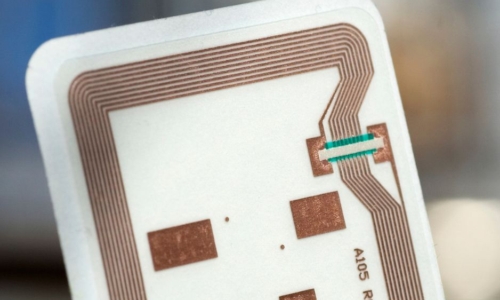
Why RFID Labels Are Essential for Retail Inventory Accuracy and Compliance in 2026
Retail in 2026 is defined by speed, precision, and accountability. Consumers expect real time inventory visibility. Retailers demand tighter compliance from suppliers. Margins are thinner. Labor costs are higher. Shrink continues to impact profitability across every segment.
In this environment, RFID labels are no longer optional. They are essential.
Radio Frequency Identification technology has moved from innovation to infrastructure. For retailers and brands that want accurate inventory data, stronger compliance, and operational efficiency, RFID labeling is a foundational requirement.
Inventory Accuracy Is No Longer a Guessing Game
Traditional barcode systems require line of sight scanning. Items must be handled individually. Counts are manual. Human error is common.
RFID changes the equation.
With RFID labels, retailers can scan hundreds of items in seconds without direct line of sight. Entire racks, pallets, or shipments can be counted instantly. This leads to dramatically improved inventory accuracy, often reaching 95 percent or higher when properly implemented.
Accurate inventory impacts everything:
- Fewer out of stock situations
• Better replenishment timing
• More reliable online order fulfillment
• Reduced overstocks and markdowns
When retailers operate with real time visibility, they make smarter decisions. They order correctly. They allocate correctly. They ship correctly. Brands that support this accuracy through compliant RFID labeling become preferred partners.
Retail Compliance Requirements Are Expanding
Major retailers have expanded RFID mandates across categories including apparel, footwear, home goods, sporting goods, and electronics. Compliance is no longer limited to a handful of SKUs. It often applies to entire product lines.
Failure to comply creates consequences:
- Chargebacks
• Rejected shipments
• Delayed product launches
• Loss of shelf space
In 2026, compliance is not just about applying a tag. It is about meeting precise retailer specifications. Encoding accuracy, placement standards, data formatting, and testing requirements all matter.
RFID labels must be produced to exact standards. Improper encoding or incorrect chip selection can result in failed scans at distribution centers or store level. That creates friction in the supply chain and damages retailer relationships.
Working with an experienced RFID label partner ensures that tags meet retailer guidelines from day one. Proper inlay selection, testing, and quality control eliminate costly errors before products ship.
Omnichannel Retail Demands Real Time Data
Buy online pick up in store. Ship from store. Same day delivery. Endless aisle.
These services depend on accurate inventory at the item level. A single inaccurate count can lead to canceled orders and lost customer trust.
RFID enables item level tracking throughout the supply chain. From manufacturing to distribution to store floor, products can be tracked with precision. Associates can perform rapid cycle counts without disrupting operations. Store inventory becomes reliable enough to support real time ecommerce integration.
Retailers investing in omnichannel growth expect suppliers to support this infrastructure. RFID labeling is the backbone that makes it possible.
Loss Prevention and Shrink Reduction
Shrink remains one of the largest challenges in retail. Theft, administrative errors, and vendor fraud continue to impact profitability.
RFID supports stronger loss prevention strategies by increasing visibility and accountability. Retailers can identify discrepancies faster. They can detect patterns. They can isolate problem areas within stores or distribution centers.
Because RFID scans are faster and more frequent, issues are discovered sooner. The longer inventory errors go undetected, the more costly they become. RFID compresses that window.
For brands, this means fewer disputes and better collaboration with retail partners. Transparent tracking strengthens trust across the supply chain.
Labor Efficiency and Operational Speed
Retail labor is expensive and increasingly difficult to source. Manual inventory counts consume valuable staff hours. Traditional cycle counts can take days and still produce inaccurate results.
RFID reduces counting time dramatically. What once required multiple employees and overnight shifts can now be completed in hours with handheld readers. Staff can focus on sales and customer service instead of repetitive scanning.
At distribution centers, RFID accelerates receiving and shipping processes. Entire cartons can be verified instantly. Errors are caught before goods move downstream.
Efficiency drives profitability. Retailers expect vendors to contribute to that efficiency through compliant, high performing RFID labels.
Data Driven Retail Requires Reliable Inputs
Retail analytics platforms rely on accurate data inputs. Forecasting models, replenishment systems, and AI driven merchandising strategies all depend on clean inventory data.
RFID provides a reliable foundation for these systems. When inventory accuracy improves, forecasting improves. When forecasting improves, margins improve.
Brands that invest in proper RFID labeling are not just meeting compliance mandates. They are participating in a smarter retail ecosystem.
Choosing the Right RFID Label Partner Matters
RFID success depends on more than attaching a tag. It requires:
- Proper inlay selection based on product material and environment
• Accurate encoding aligned with retailer data requirements
• Consistent quality control and testing
• Integration with existing labeling workflows
An experienced RFID label provider understands the technical standards and compliance mandates of major retailers. They ensure tags perform correctly in real world conditions, not just in theory.
In 2026, retailers expect precision. They expect speed. They expect compliance.
RFID labels deliver all three.
For brands that want stronger retailer relationships, fewer compliance issues, and better inventory performance, RFID labeling is not simply an upgrade. It is an operational necessity.